REXULTI® (brexpiprazole) demonstrated consistent safety across 2 clinical trials with a combined total of >500 patients aged 51-90 years
Most common adverse reactions in adults (≥4% and at least 2x the rate for placebo)
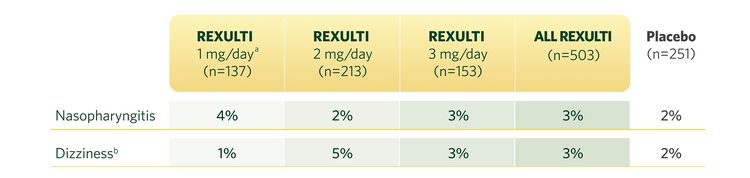
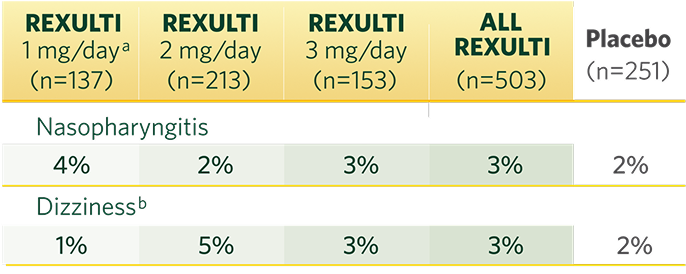
Adverse reactions in ≥2% of REXULTI-treated patients and greater than placebo (pooled pivotal trial population) were urinary tract infection (3% vs 1%), somnolenceᶜ (3% vs 1%) and insomniaᵈ (4% vs 3%). Headache occurred at the same rate in REXULTI- and placebo-treated patients (8% vs 8%).
A combined 3% of patients treated with REXULTI across all doses reported somnolence (2.8%) or sedation (0.2%) vs 1% in the placebo arm (somnolence 1%, sedation 0%).1,c
Does not prolong QTc interval to any clinically relevant extent at 4x MRHD for the treatment of agitation associated with dementia due to Alzheimer's disease.
a1 mg once a day REXULTI dosage is not a recommended dosage for the treatment of agitation associated with dementia due to Alzheimer’s disease.
bDizziness and vertigo are grouped to dizziness.
cSedation and somnolence are grouped to somnolence in the Prescribing Information.
dInitial insomnia and insomnia are grouped to insomnia.
MRHD, maximum recommended human dose; QTc, corrected QT interval.
REXULTI vs placebo: Similar low discontinuation rates due to adverse reactions from two 12-week pivotal trials across all doses
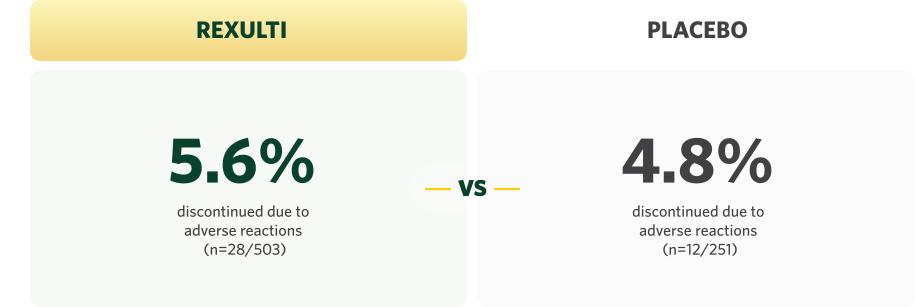
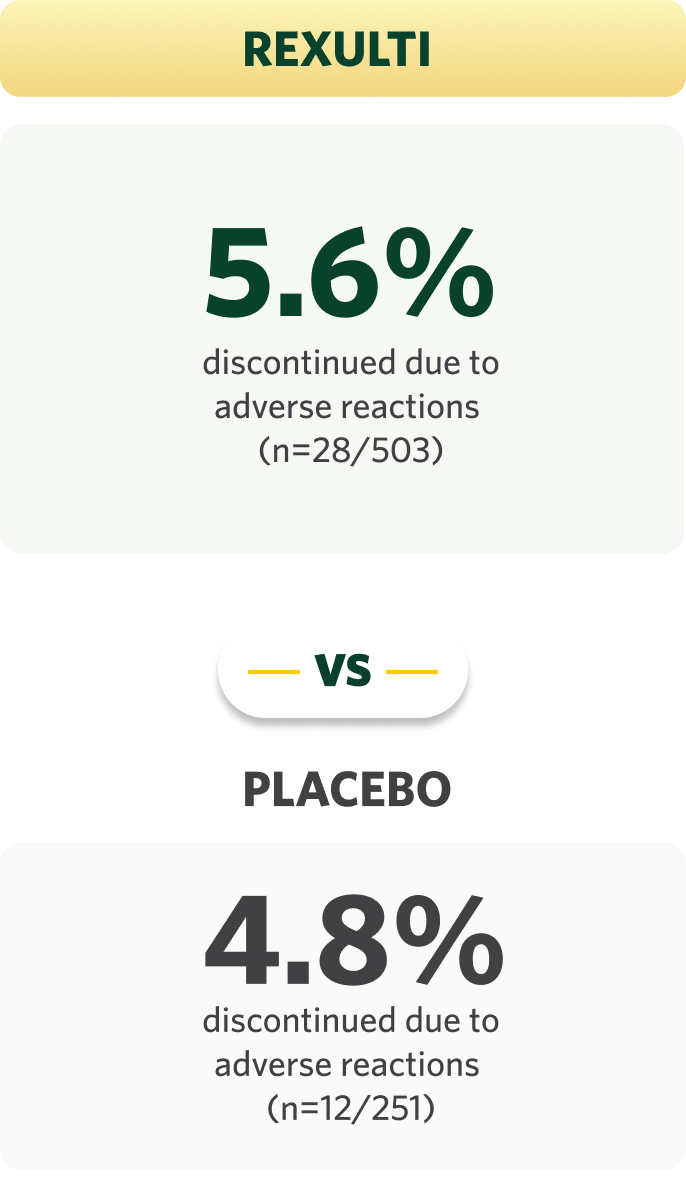
Nervous system disorder discontinuations with REXULTI1
- 1 (0.2%) discontinuation for somnolence; 0 discontinuations for sedation
- 1 (0.2%) discontinuation for dizziness; 0 discontinuations for headache
Long term safety and tolerability of REXULTI: Data from extension study2
This extension trial studied REXULTI 2 or
3 mg/day in a Phase III, 12-week, multicenter, non-pivotal, single-arm trial2
- Patients previously randomized to REXULTI continued their previous dose2
- Patients previously randomized to placebo were initiated on REXULTI2
- Dosing was concealed to maintain blinding of the placebo-controlled trial; dose adjustments were permitted2
Study Limitations2,3
- The extension study did not include a control group and was a nonrandomized, single-group assignment2
- Sample size was not based on statistical power considerations2
- The trial population was derived from eligible patients who rolled over from Study 82,3
Long-term extension study design2
Study design
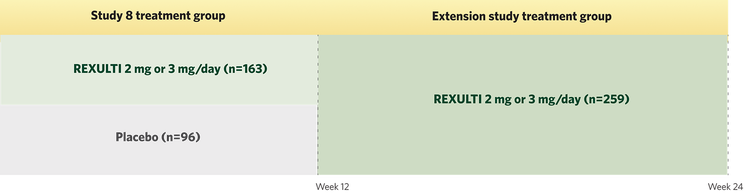
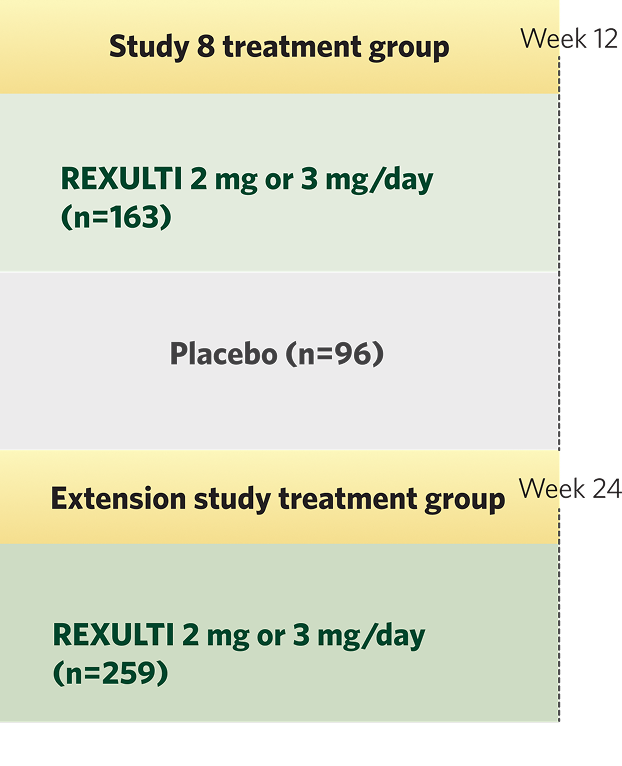
- All patients were on REXULTI at Week 12; there was no placebo treatment arm during the extension study period2
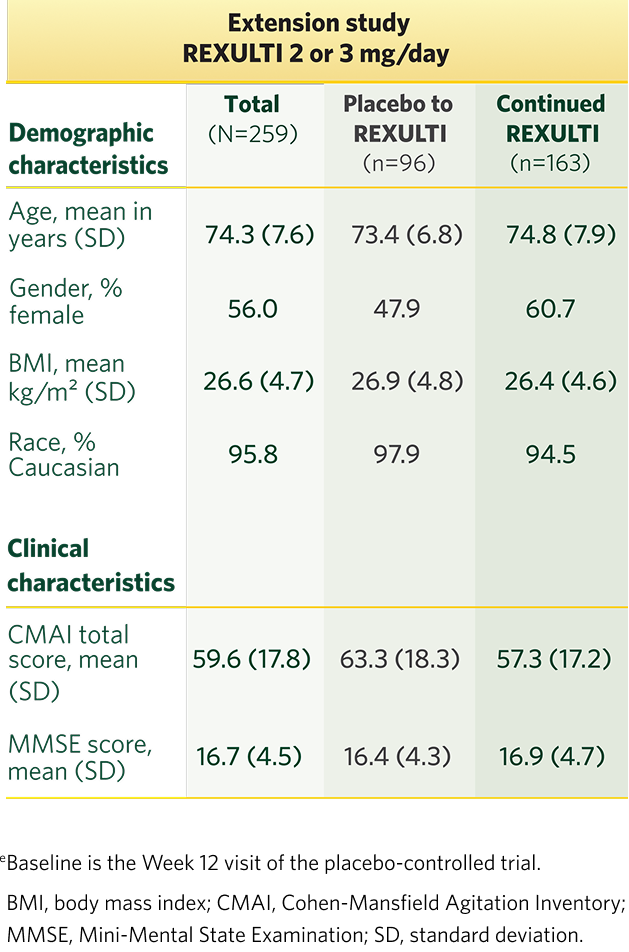
Baseline characteristics2,e
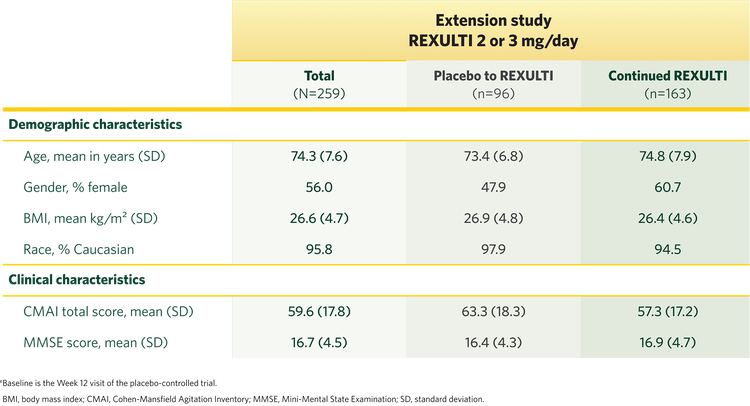
Adverse reactions in ≥2% of patients treated with REXULTI1,2
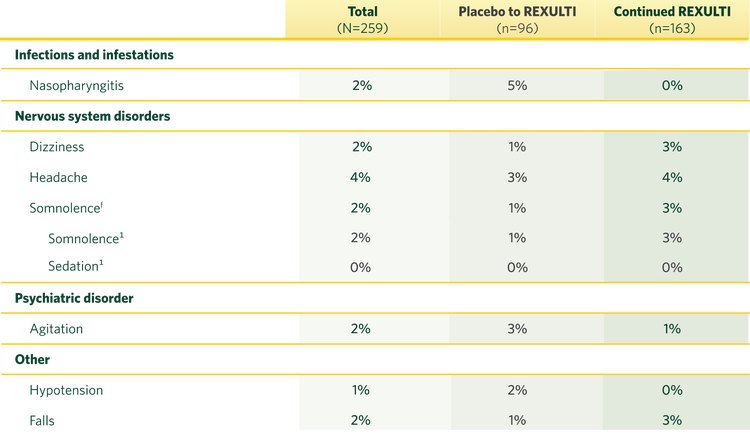
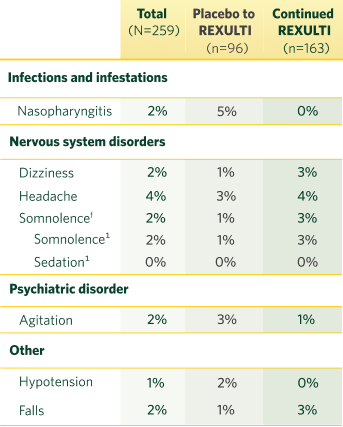
- In the 12-week extension study of REXULTI, 1% of patients had EPS-related adverse reactions (excluding akathisia) reported, and 0% of patients had akathisia reported2
- Similar discontinuation rates due to adverse reactions were observed in Study 8 and the 12-week extension trial; twelve patients (4.6%) discontinued due to TEAEs2,3
- 1 (0.6%) discontinuation to somnolence; 0 discontinuations due to sedation1
fSomnolence and sedation are grouped to somnolence adverse reactions in the Prescribing Information.
EPS, extrapyramidal symptoms; TEAE, treatment-emergent adverse event.
Exploratory analysis of CMAI total score2
Efficacy of REXULTI in the extension study was an exploratory endpoint2
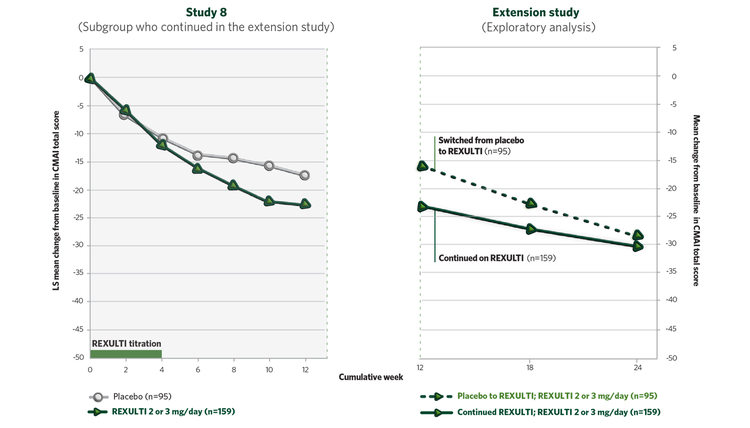
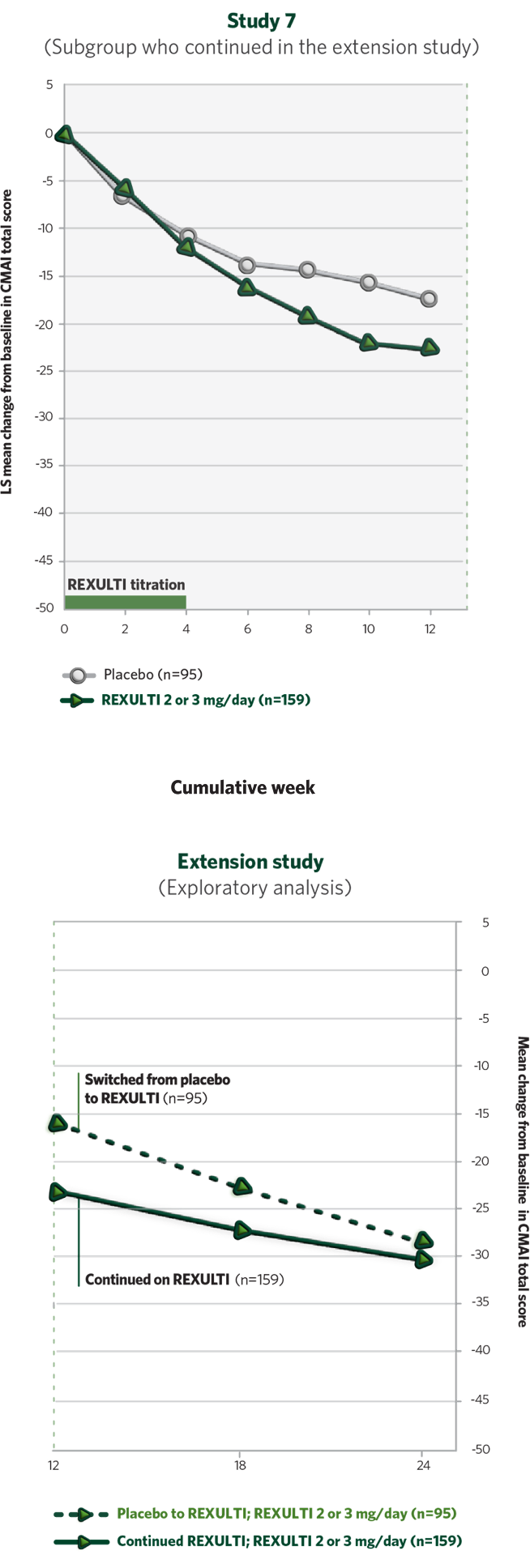
An exploratory analysis examined the change from Week 12 to Week 24 in CMAI total score
Mean (SD) CMAI total score continued to improve in the extension trial, from 59.4 (17.7) points at Week 12 to 50.9 (15.0) points at Week 24, a mean (SD) change of -9.1 (13.5) points. Mean (SD) improvement from Week 12 to Week 24 was greater in the prior placebo subgroup (from 63.0 [18.1] to 51.6 [14.4], a change of -12.5 [14.6] points) than in the prior brexpiprazole subgroup (from 57.3 [17.2] to 50.4 [15.4], a change of -7.1 [12.3] points). By Week 24, mean CMAI total scores were similar in both subgroups.2
CMAI, Cohen-Mansfield Agitation Inventory; LS, least squares; SD, standard deviation.
References: 1. Data on file (REX-655). 2. Behl S, Slomkowski M, Chen D, et al. Brexpiprazole for the treatment of agitation associated with dementia due to Alzheimer’s disease: a 12-week, active-treatment, extension trial. J Alzheimers Dis. 2024;102(2):520–529. 3. Lee D, Slomkowski M, Hefting N, et al. Brexpiprazole for the treatment of agitation in Alzheimer dementia: a randomized clinical trial. JAMA Neurol. 2023;80(12):1307-1316.
including BOXED WARNING.